Precision Couplings
How the hub grips the shaft decides whether your torque rating is real or only on paper.
When buyers compare couplings, the conversation usually stops at torque rating and bore size. How the hub attaches to the shaft is one line in the datasheet. That line decides whether your torque rating is real. At the same model and the same rated torque, a joint that slips with a set screw will transmit cleanly with a clamping hub. Conversely, in applications needing frequent disassembly or a sanitary rating, the wrong fixing method makes the whole assembly unworkable. It deserves its own column in the selection checklist.
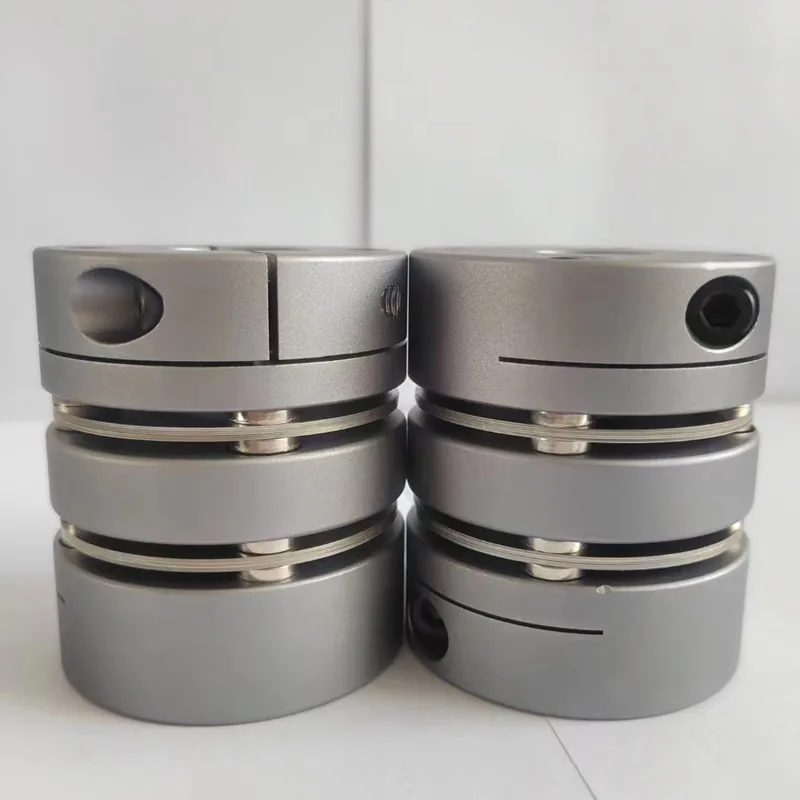
A set screw is a threaded hole in the side of the hub with a socket grub screw bearing on the shaft or on the key. Its advantages are the simplest construction, the lowest cost and the shortest axial length, and it is entirely adequate for light duty, low speed, non-critical work. Its failure mode is rotation. Under reversing torque, vibration or shock, a set screw works loose. Once it slips there is no gradual degradation, you simply have a hub that has lost its angular position, which on a servo axis means the machine is no longer where the controller believes it is. Set screws therefore belong on light, non-critical joints, never on a shaft whose phase relationship must hold over time.
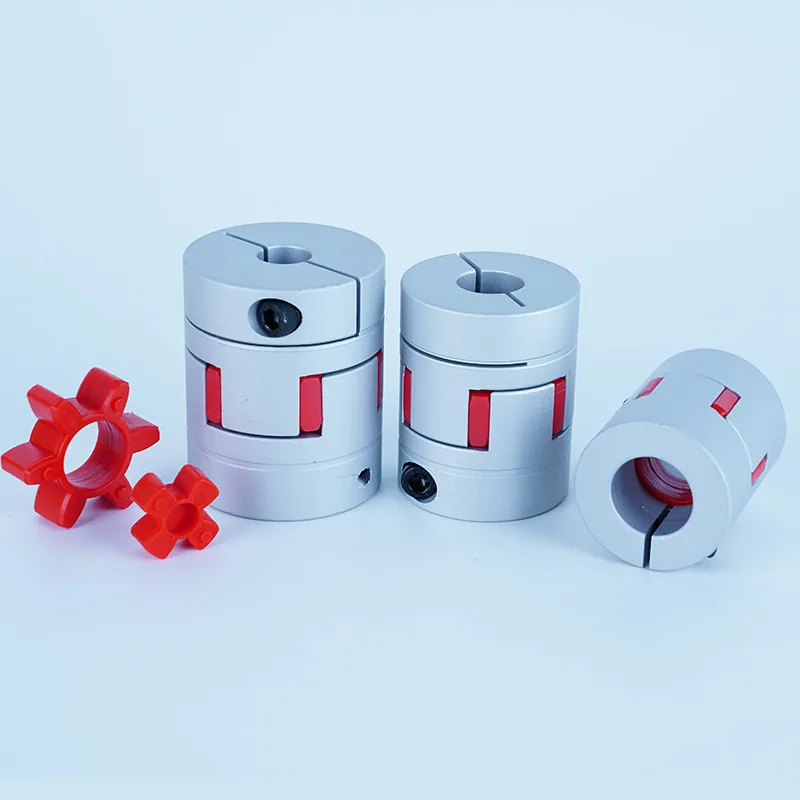
A clamping hub has a single radial slit closed by a screw, which squeezes the whole bore onto the shaft. Load distribution changes from a single point to the full circumference, so for the same bore and screw size the transmissible torque is markedly higher, and the shaft is not marked, which matters on a motor shaft you cannot easily replace. The cost is a tighter bore tolerance: the shaft must sit within the specified band. A worn shaft with a few hundredths of variation clamps unevenly and is less forgiving than an expansion sleeve. Clamping is the default for servo and motion control, and axes with high positional demands should additionally use a keyway.
An expansion sleeve is not a slit hub but a set of separate parts that push against each other on tapered surfaces, expanding simultaneously into the shaft and into the hub. Torque capacity per unit bore is the highest of the three, and it can be fully released without damaging any component. Our stainless jaw coupling series uses expansion-sleeve fixing for a practical reason: equipment in wet, washdown, corrosive and sanitary areas is often a retrofit of older machinery, where shaft dimensions vary more than on a new machine, and the sleeve tolerance behaviour matches exactly that situation. If equipment must be dismantled for cleaning on a regular basis, the sleeve is also the only option that does not degrade with repeated assembly.
First, how much bore clearance. Normal practice is a clearance of 0 to plus 0.05 mm, meaning the bore is a hair larger than the shaft and the clamp or sleeve closes the gap. An interference fit requires heating to assemble, which is a different class of process and usually not feasible in the field. Second, bores and keyways can be made to drawing; this is routine service, not a special request. If you have the motor shaft drawing or measured dimensions, send them and non-standard bores and keyways can be produced. Both points sound trivial, but confirming them at the selection stage prevents a coupling that will not fit on arrival.
Light duty, cost sensitive, no positioning requirement: set screw. Servo or stepper axis requiring positional accuracy: clamping. Reversing or shock loads: clamping plus keyway. Wet, washdown, corrosive or sanitary, or a retrofitted older machine: expansion sleeve. A shaft that cannot be damaged or replaced: never a set screw. If two options look equally good, the deciding question is not torque. It is what happens if the joint slips at the worst possible moment.
How the hub grips the shaft decides whether your torque rating is real or only on paper.
Free Selection Help →| Payment | 50% deposit, balance before shipment |
|---|---|
| Bank transfer | Company-to-company only, no personal accounts |
| Packaging | Carton, or pallet with wooden case by quantity |
| Certification | ISO 9001 |